Skip to content
The Roman Baths — Ensana Nové Lázně, Marienbad

Ensana Nové Lázně · since 1896

The Roman Baths

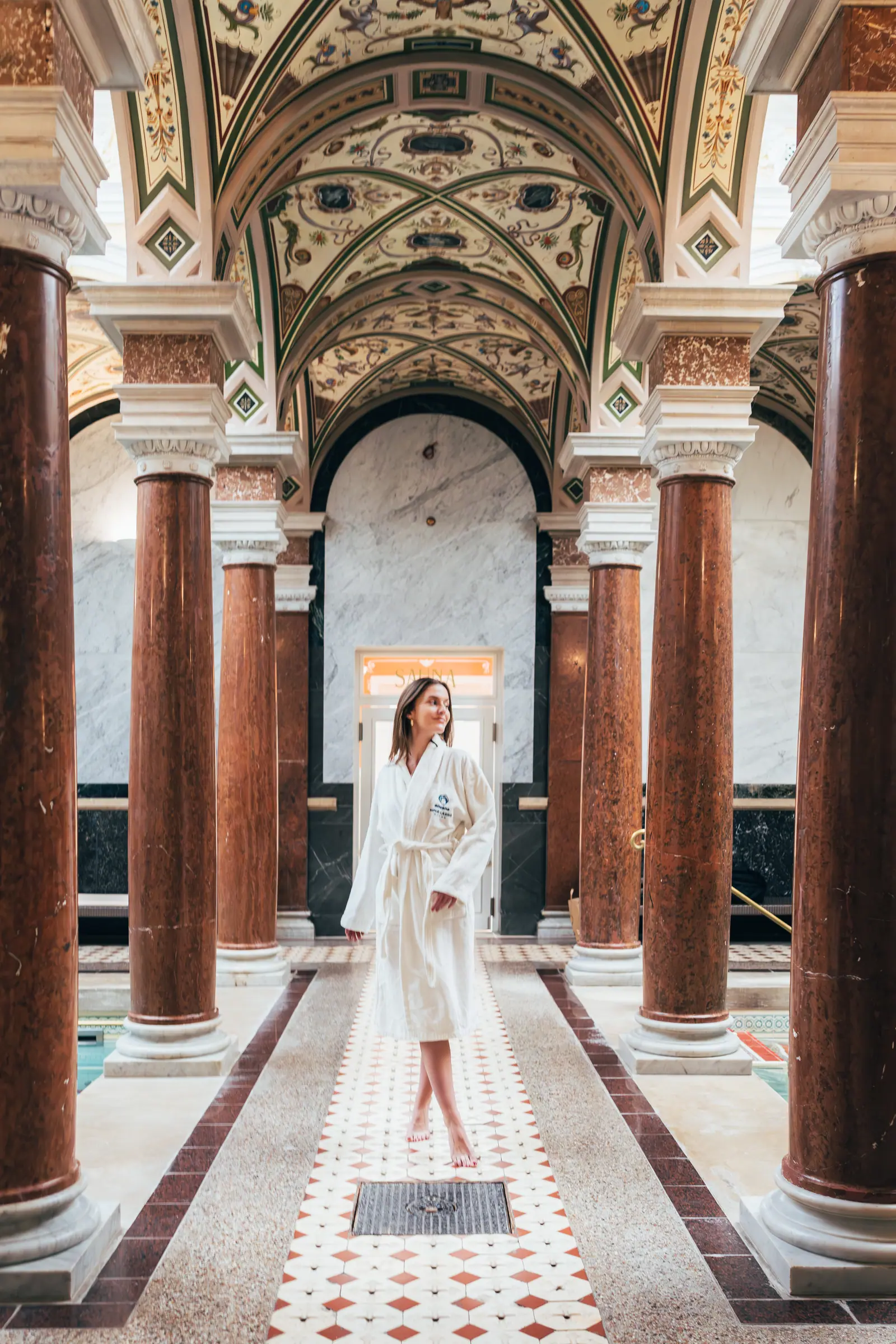
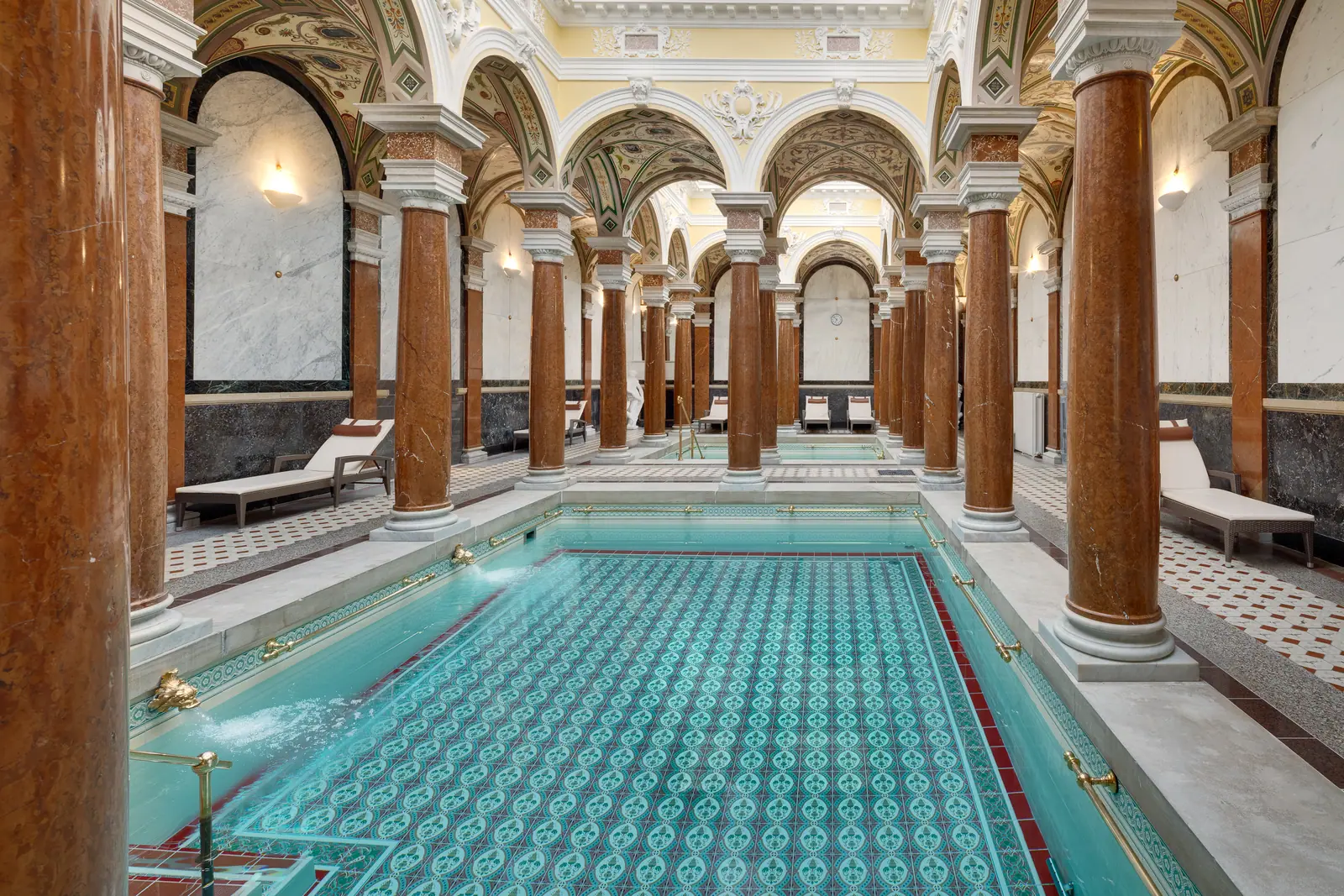
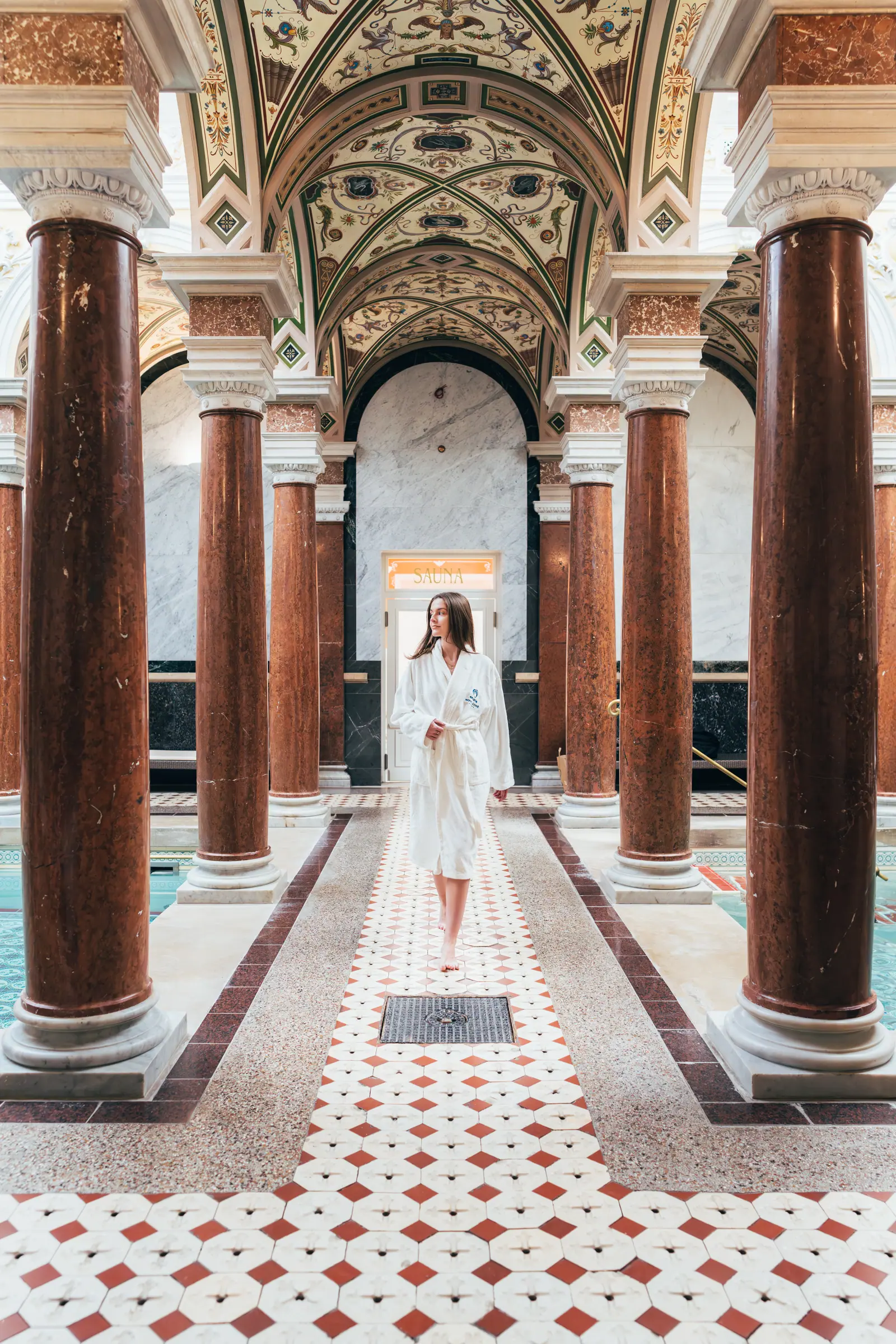
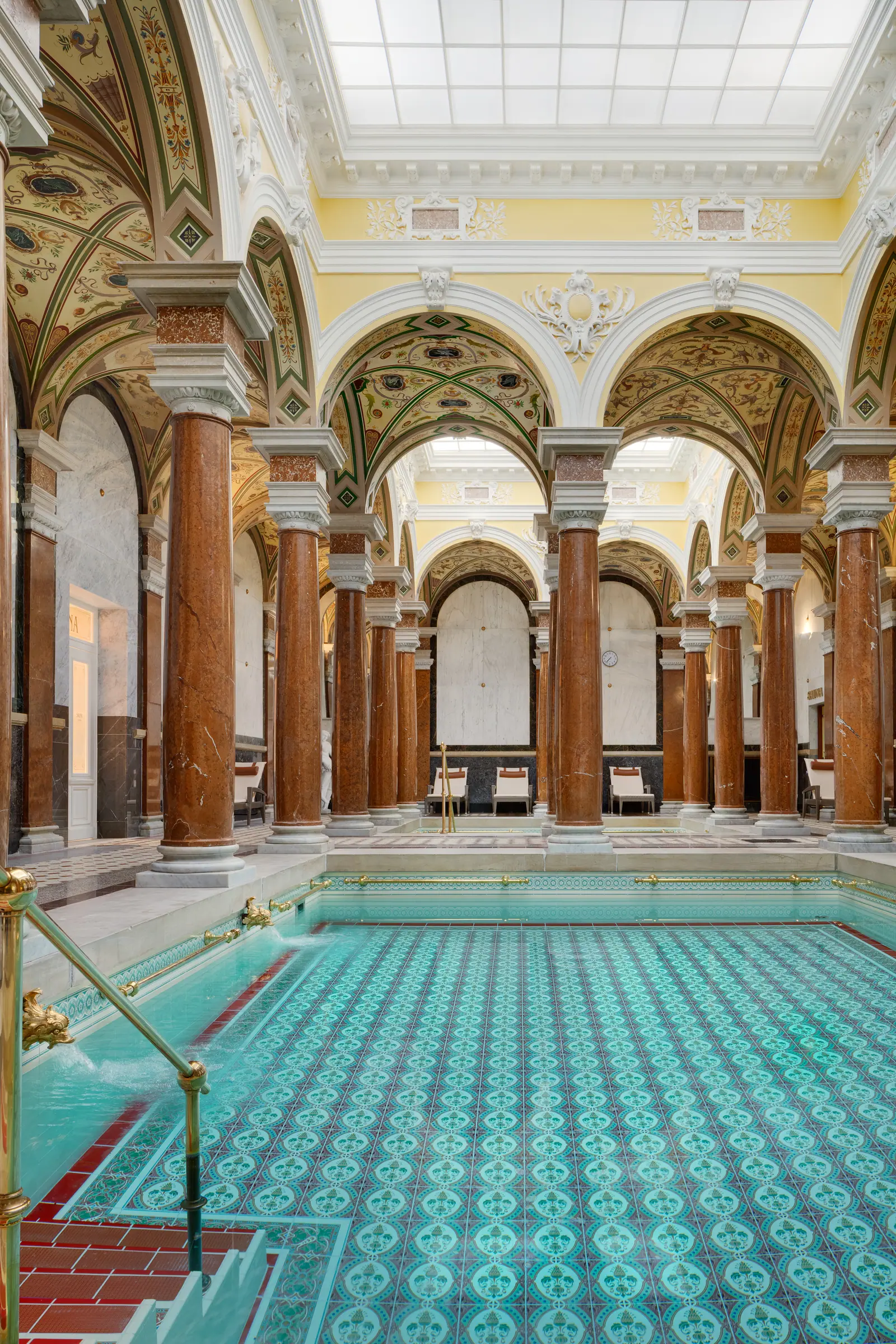
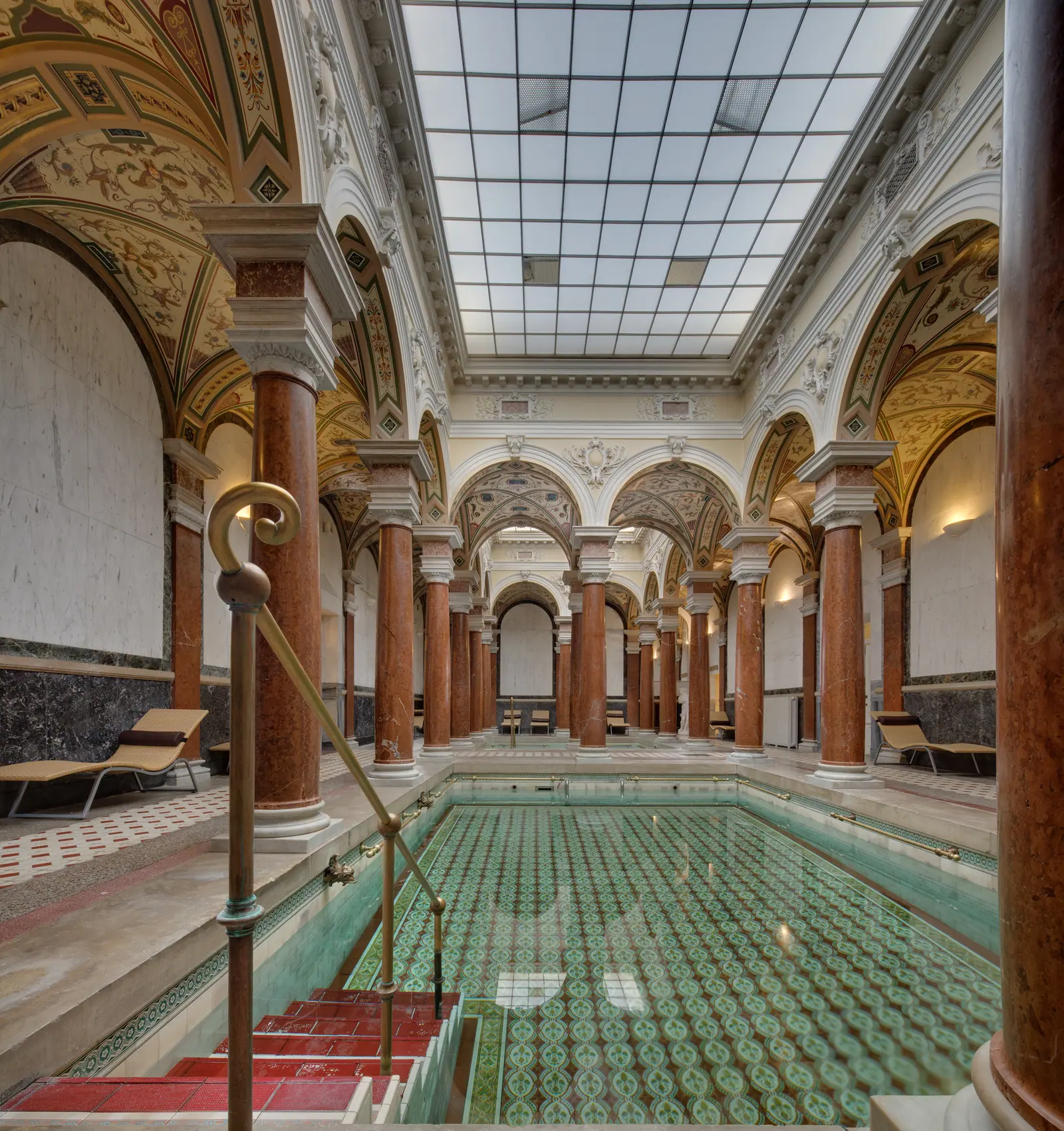
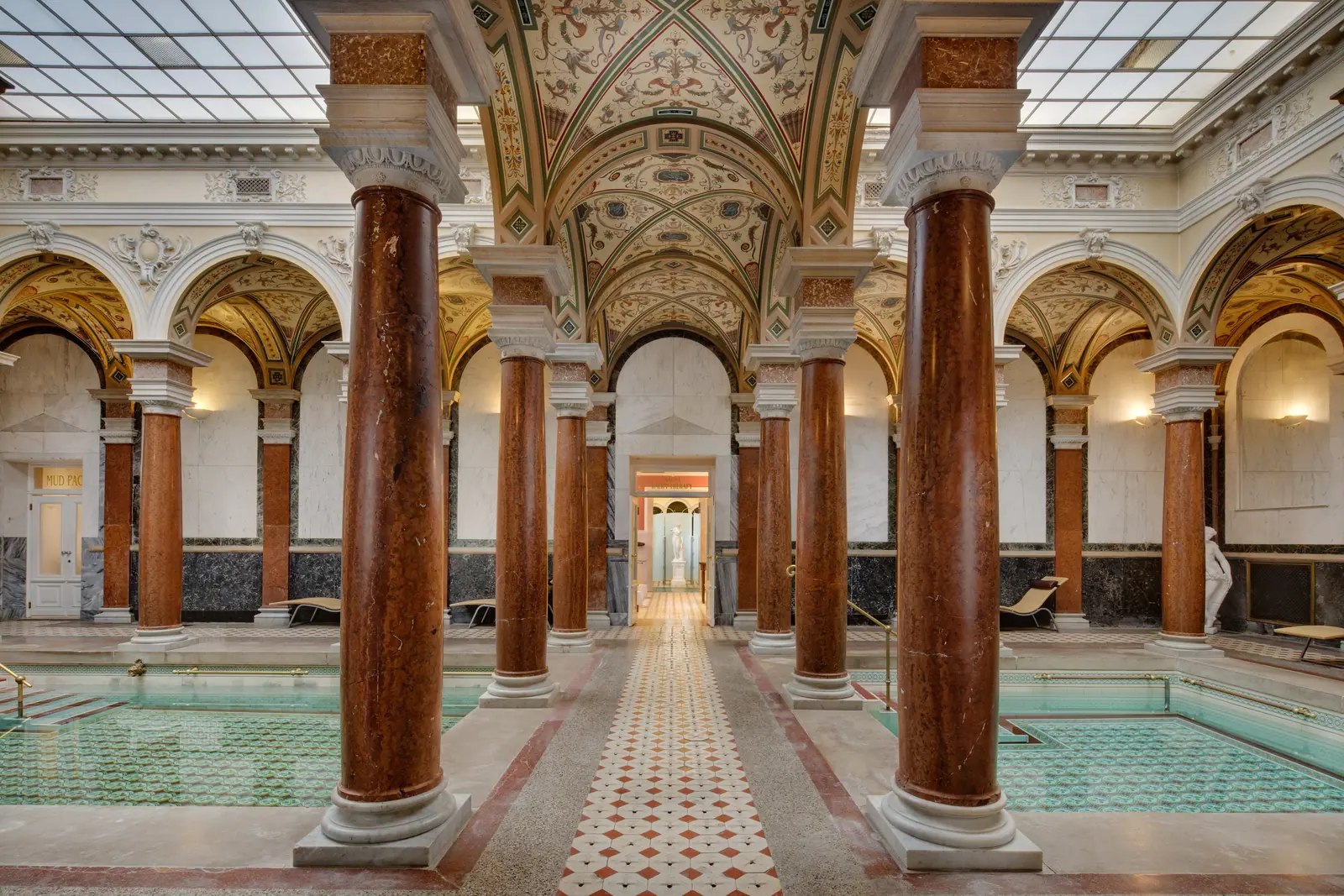
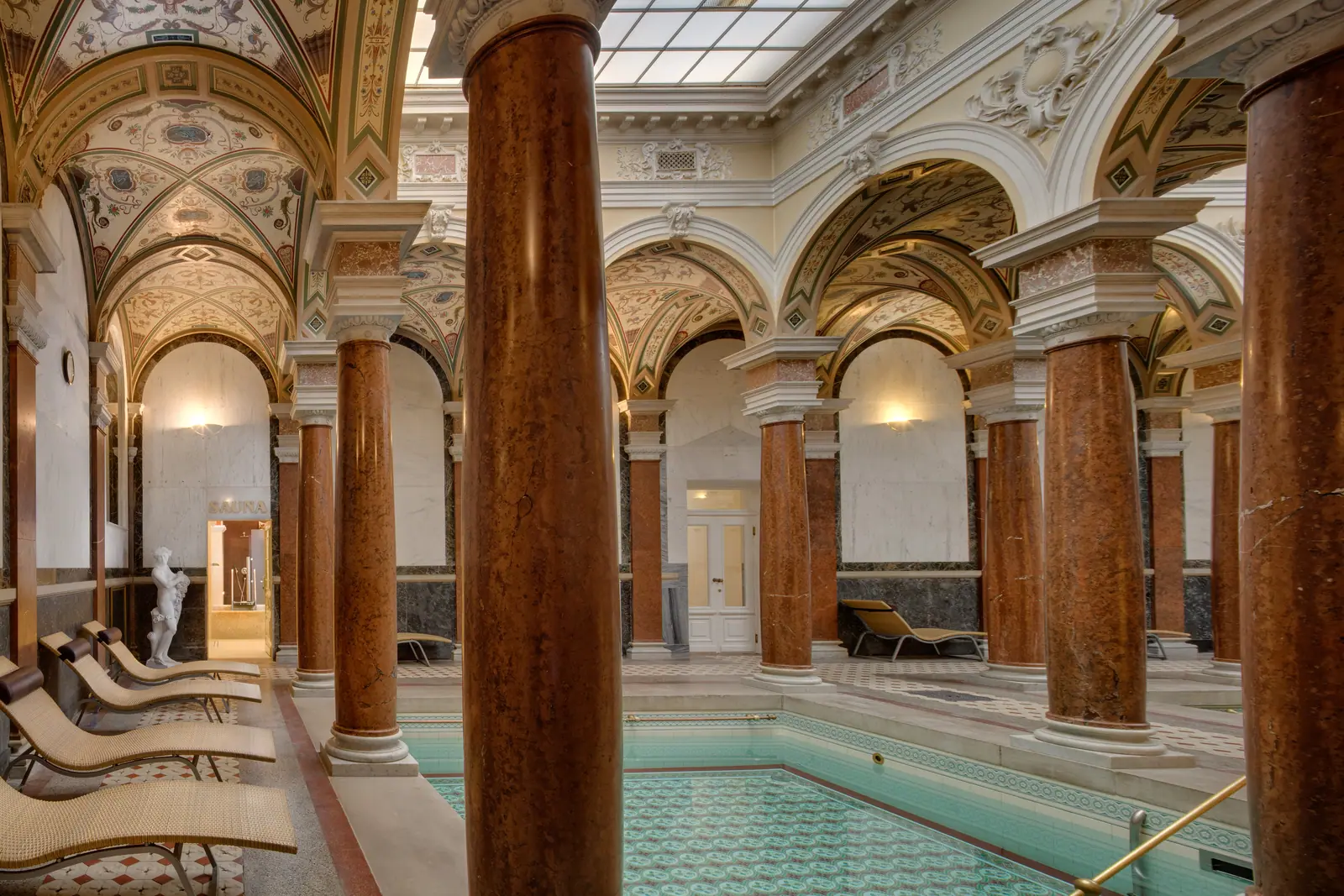
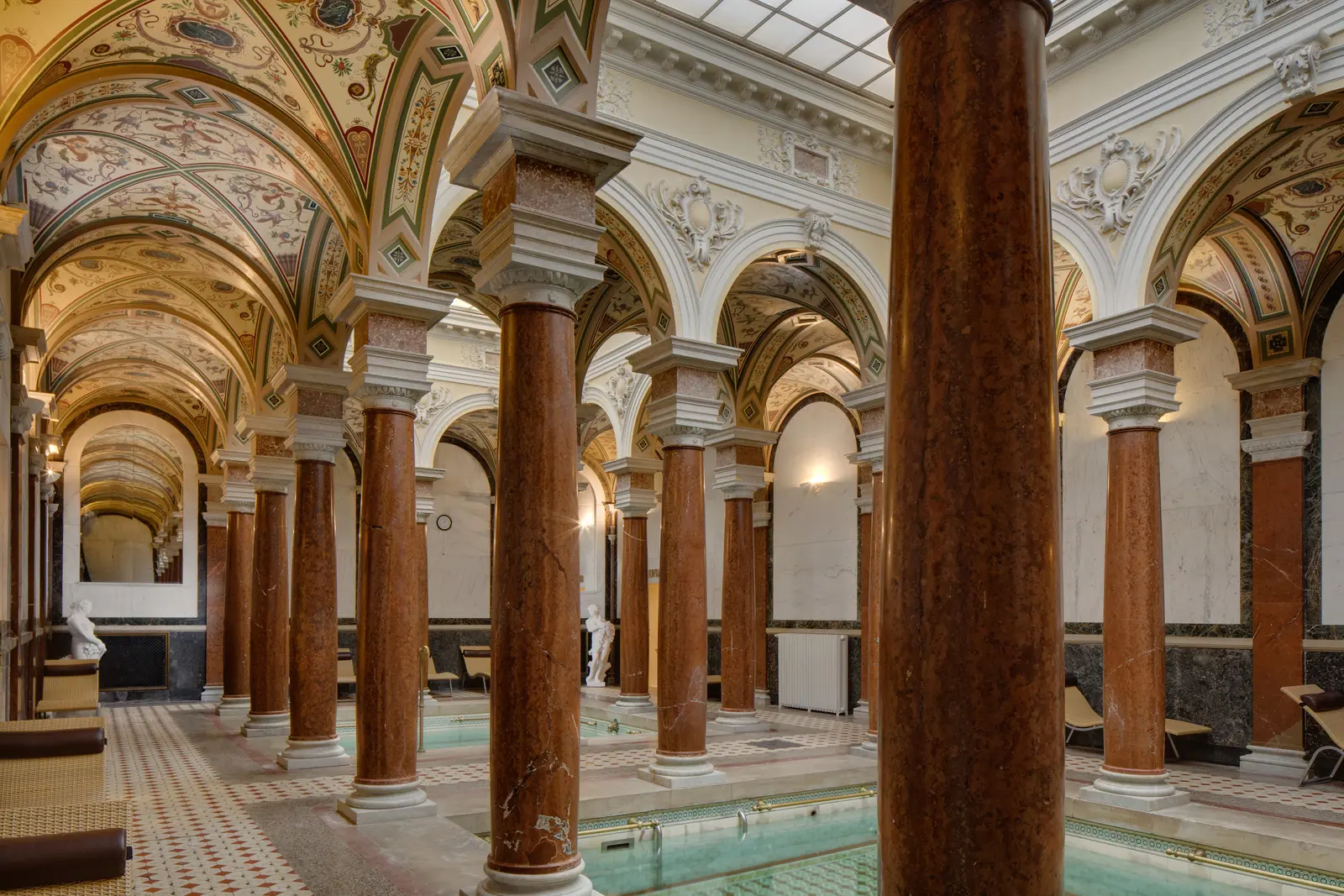
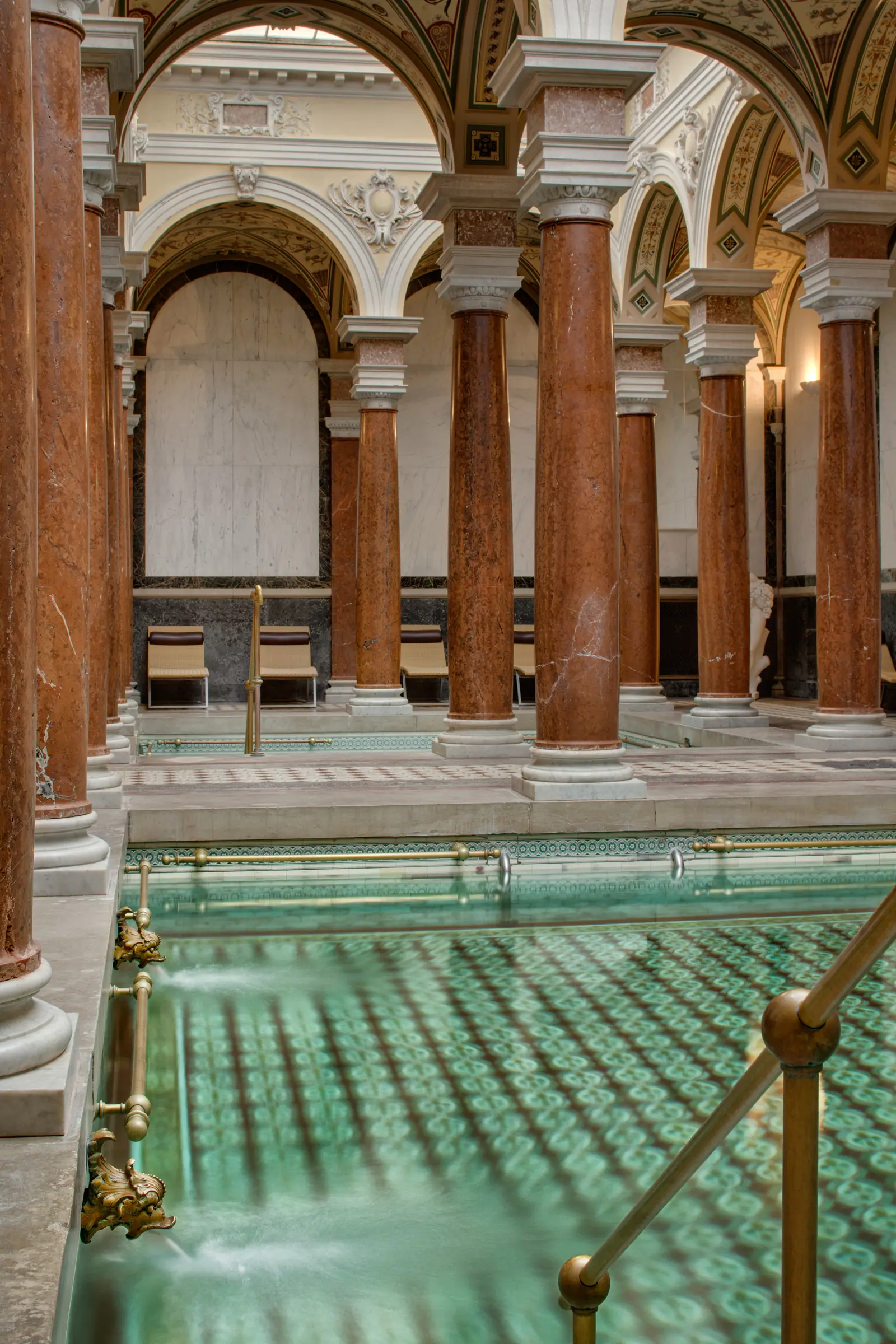
A glazed ceiling, twenty-one columns of dark-red marble and gilded lion heads above the water. The Roman Baths are not a stage set — you bathe in a monument that has served its purpose without interruption since 1896.

How to get into the Roman Baths

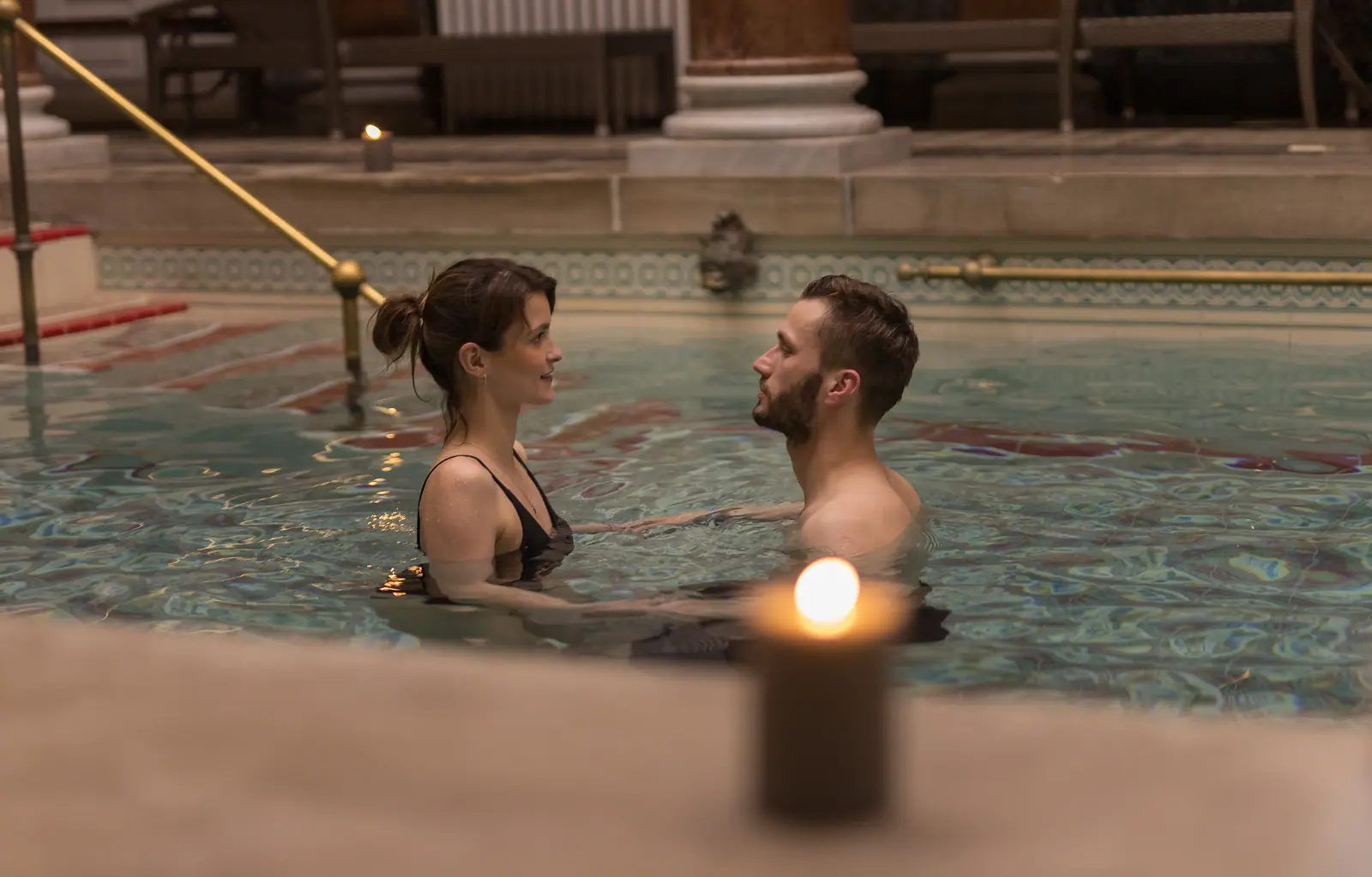
The Roman Baths belong to the five-star Nové Lázně hotel; they are not a public pay-per-entry pool. That is precisely why you will never meet a crowd there.

The surest way — stay with us

Guests of the Ensana Nové Lázně and Ensana Centrální Lázně hotels have access to the Roman Baths as part of their stay. By far the most comfortable and reliable way to enjoy them without worrying about capacity.

Guests of the Ensana Hvězda hotel have access to the pool in the Roman Baths with a stay of more than three nights.

Visiting from outside

Entry is possible for visitors not staying with us as well — but strictly by prior reservation and subject to currently available capacity. Arrange your slot in advance by e-mail with the spa reception.

Without a prior reservation entry is not possible. Capacity follows the operation of the spa department and the needs of resident guests, so it cannot be guaranteed in advance or promised for a specific hour.

Reservations and enquiries

spa.nl@ensanahotels.com

What the history tells us

The New Baths grew out of a plain fact: the town could no longer keep up with its own success. What we admire today as an architectural gem was, above all, an answer to a shortage of cabins.

  1. 1872

    The first train arrives

    The railway opened Marienbad to Europe and visitor numbers surged. Existing capacities were no longer sufficient and a major reconstruction became necessary.

  2. before 1890

    The old New Baths and the "steel baths"

    The original building had 42 cabins, among them those for the so-called steel baths (Stahlbäder). That was the popular 19th-century term for a bath in the Ambrose Spring — the water was so rich in iron that it stained the tub rust-red and promised patients "steely health".

  3. 1892–1896

    A build that was not allowed to disturb the season

    The impetus came from Abbot Alfred Clemens, who decided on the construction, secured the financing and gave the project a clear vision. Construction took four years and always took place in winter, outside the main season, so as not to disrupt spa operations. After Schaffer’s alterations the number of cabins doubled.

  4. 1 June 1896

    The ceremonial opening

    The building was designed by Marienbad-born Josef Schaffer. He found his inspiration travelling through Italy — in Venice, Bologna and Florence; elements of the Italian Renaissance gave the building its timeless character. The abbot’s initials A. C. and A. T. (Abbas Teplensis) are carved into the pediment to this day.

A hall that never went out of use

The glazed ceiling floods the interior with soft daylight that reflects off the surfaces of the pools and underscores the monumentality of the hall. The Roman Baths rank among the most valuable and best-preserved examples of late-19th-century European spa architecture.

Columns
21 columns of dark-red Salzburg marble
Capitals
White Carrara stone
Spouts
Gilded, shaped as lion heads
Tiling
Coloured majolica
Pools
Two original, a third with a counter-current from the modern restoration
Light
Glazed ceiling, daylight along the full length of the hall

The royal cabins

The New Baths soon became a destination for European aristocracy. The complex holds two private bathing cabins, still used today for special balneotherapy.

The Royal Cabin belonged to the British King Edward VII, who visited Marienbad nine times in total; his carbonic baths became a symbol of the prestige of the local treatments. The cabin has preserved its original fittings — a copper steam boiler, a historical heater, luxurious majolica tiles and paintings of birds on the walls. The doors to the loggia are adorned with original painted glass panels from the famous Tyrolean Geyling workshop, which shimmer in all colours in the sunlight. A stay in the cabin was meant to evoke a garden pavilion amidst nature.

The Imperial Cabin carries the name of Franz Joseph I.

What belongs to the Roman Baths today

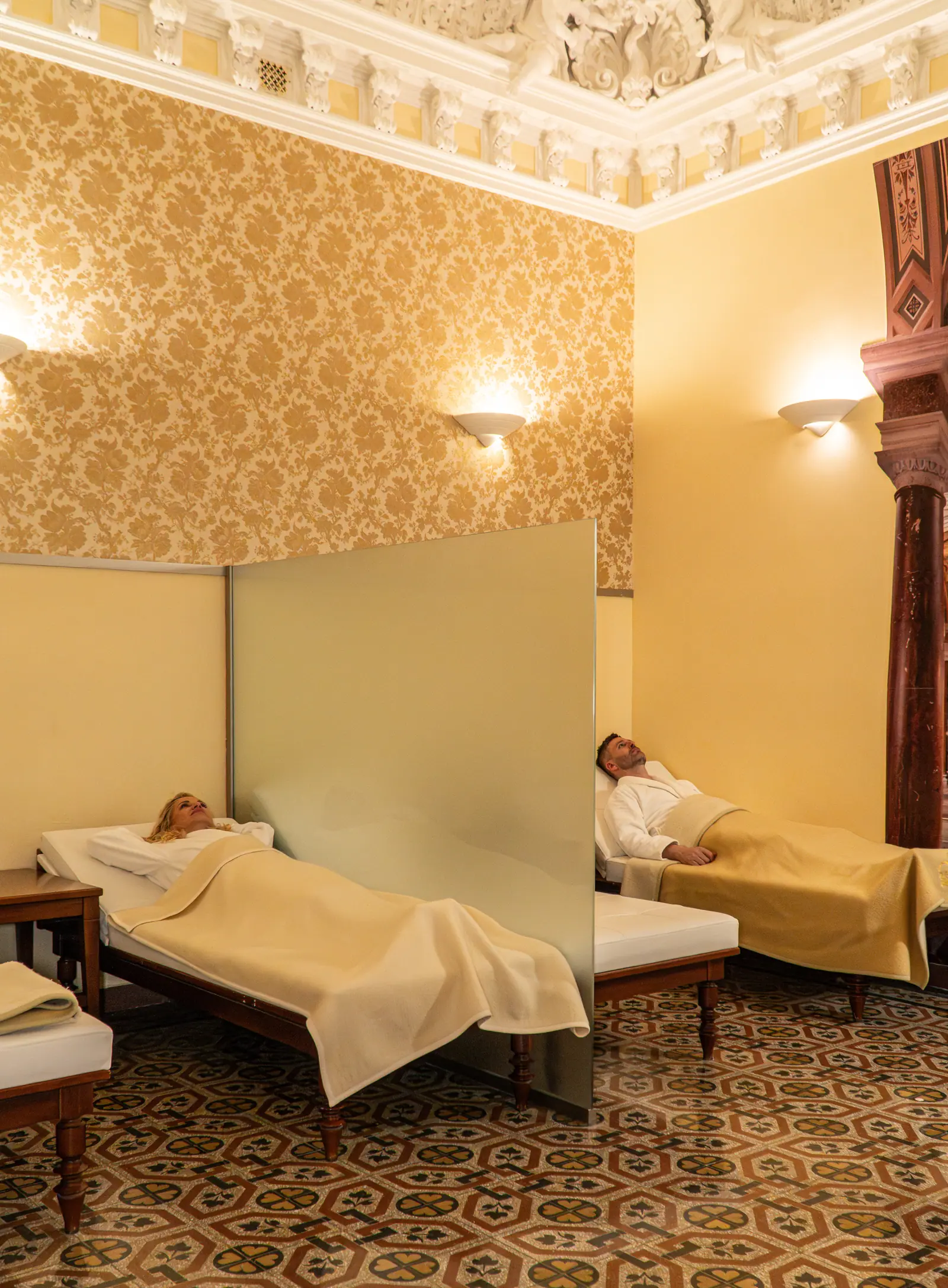
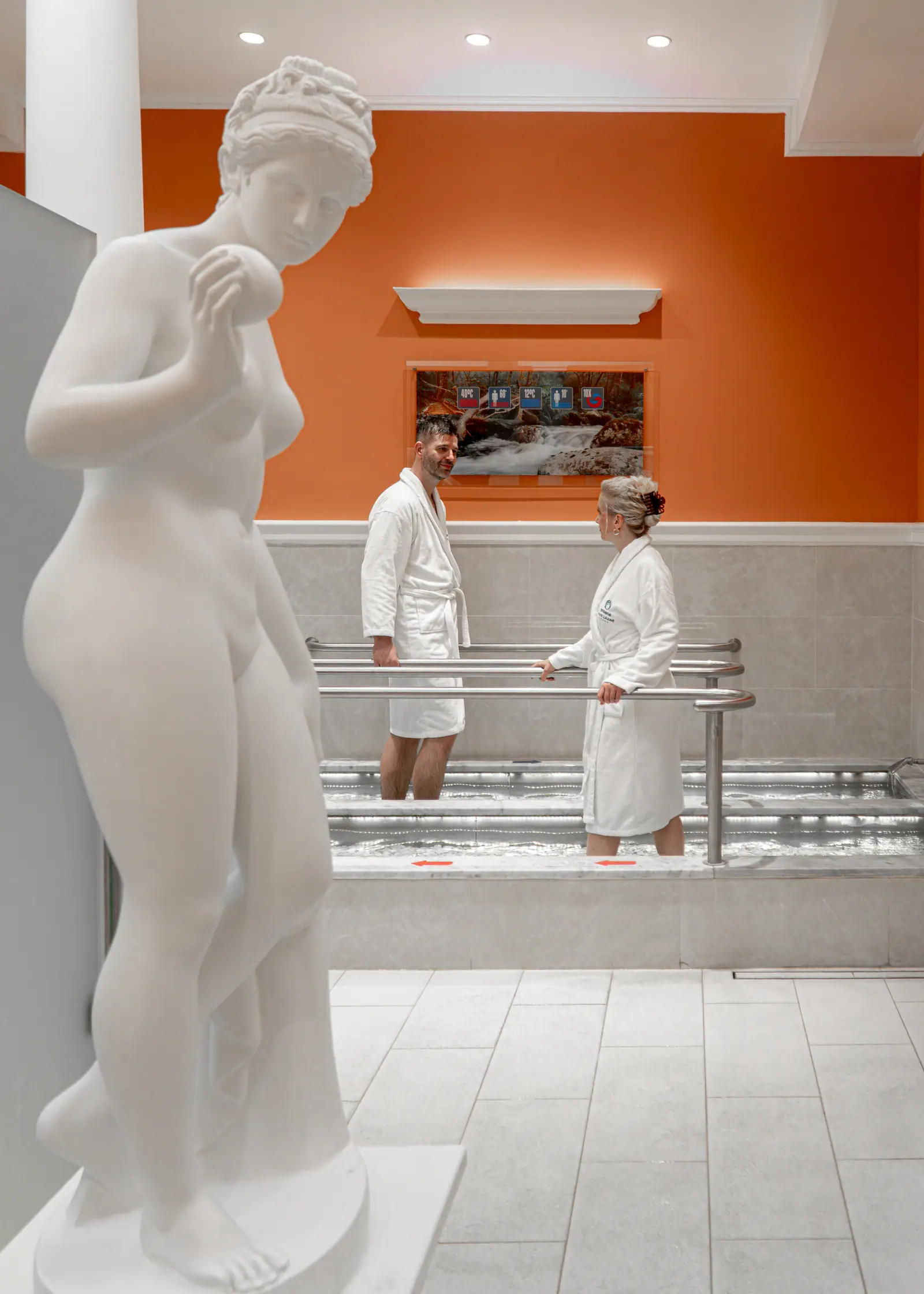
A modern wellness area adjoins the historical hall.

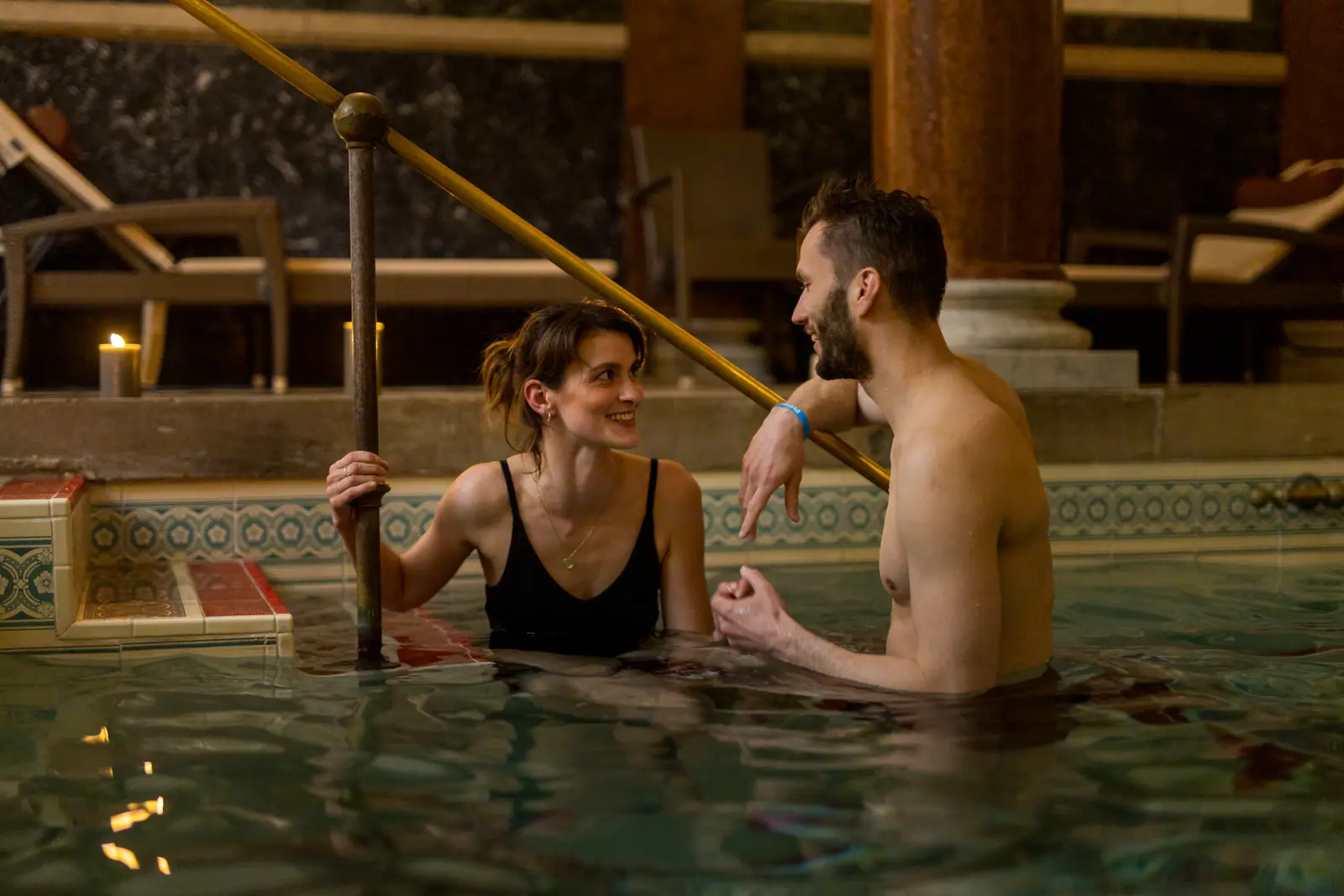
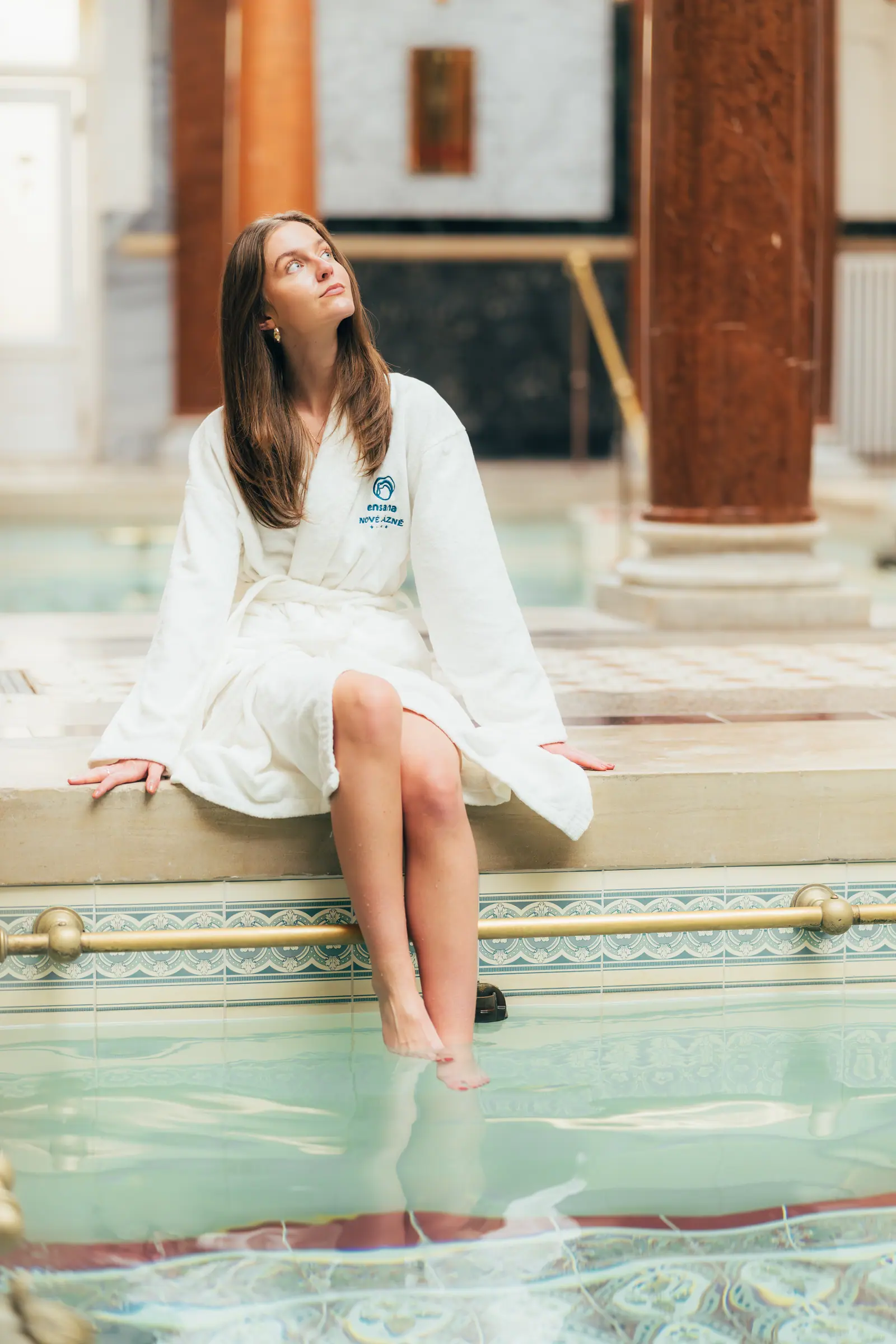
The pools hold ordinary water, simply more gently chlorinated than a standard swimming pool. Mineral water is reserved for the tub baths — and the two combine beautifully: first the bath as a treatment, then rest beneath the marble vault.

Photo gallery

Click to enlarge.

Marienbad · Ensana Hotels
Book now